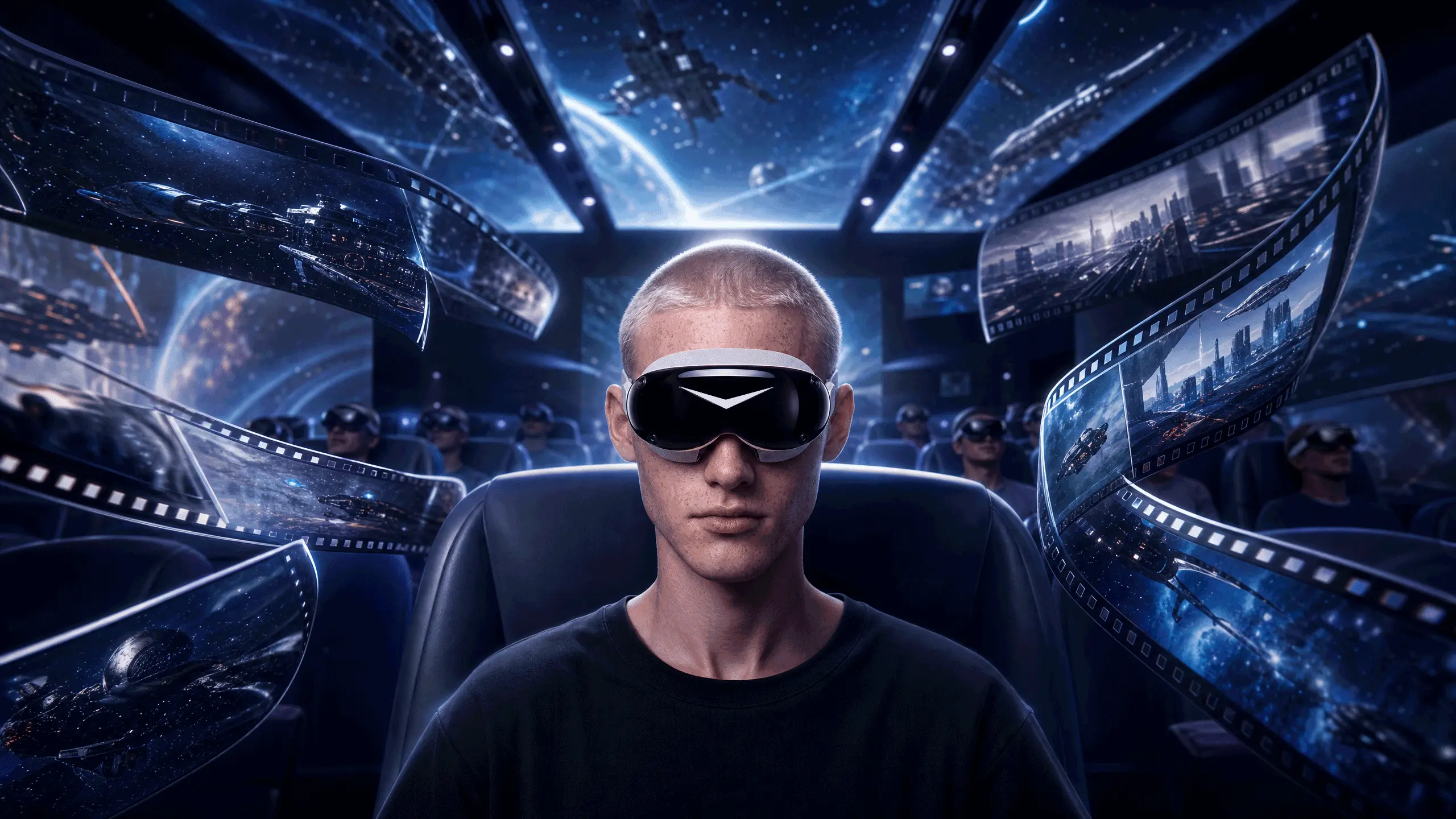
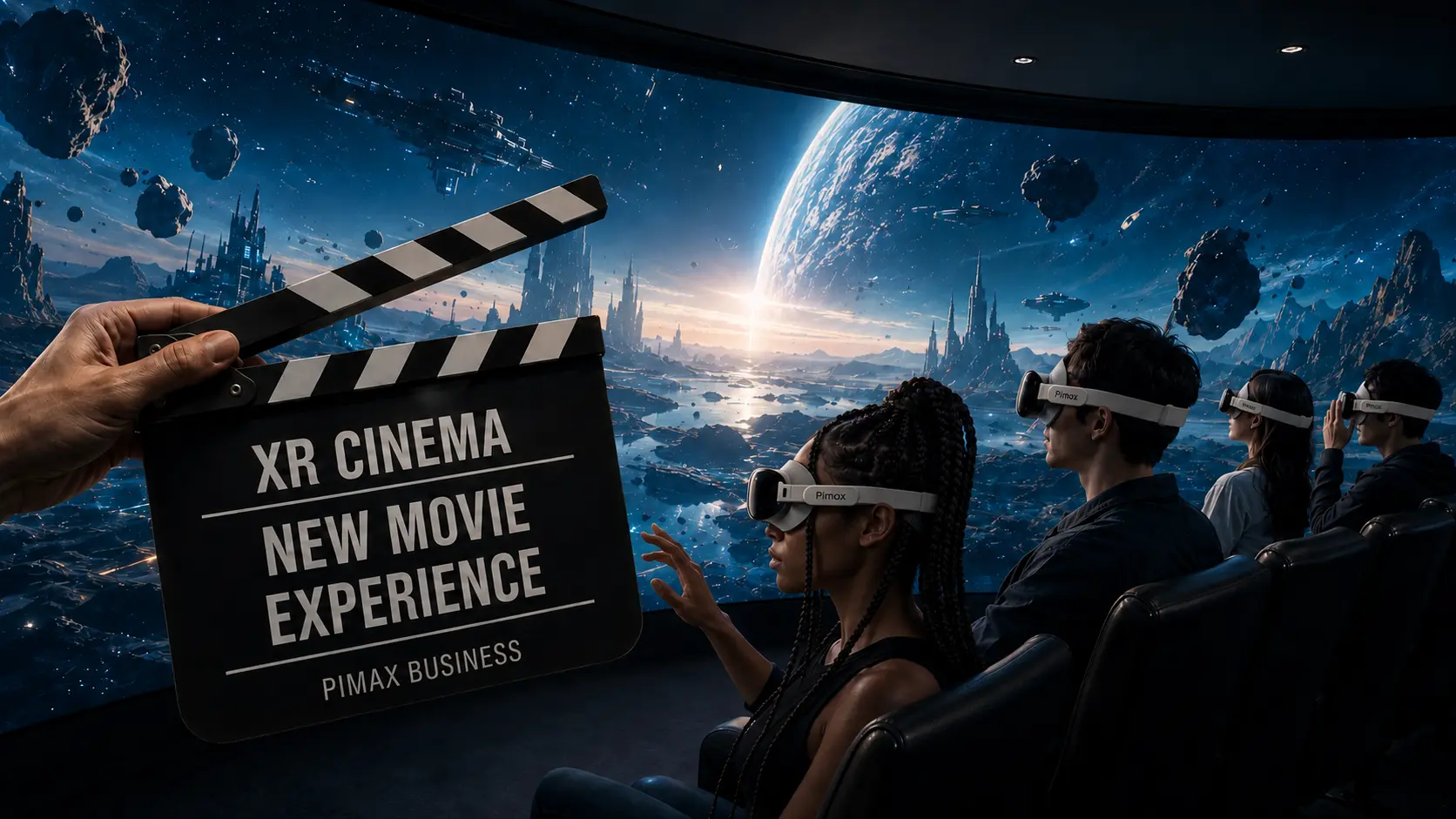
XR Cinema is bringing VR cinema and immersive film into theaters, cultural tourism venues, and location-based entertainment. Instead of watching a story on a fixed screen, audiences enter an immersive environment shaped by visuals, sound, and space.
With a VR headset, viewers can look around the virtual environment as the film unfolds around them, moving from “watching a story on a screen” toward “being inside the space where the story takes place.” This creates a different cinematic experience, often described as XR Cinema, an XR theater, VR Cinema, or an immersive film experience.
For commercial venues, however, XR Cinema involves more than immersive content and VR headsets. Visual quality, wearing comfort, spatial design, computing performance, multi-device management, and daily operations all affect how reliably the experience can serve audiences. Using XiYing Ultimate XR Cinema as a real-world example, this article explores how these requirements come together in a commercial XR deployment.
How Is XR Cinema Different from a Traditional Movie Theater?
The viewing model of a traditional cinema is relatively fixed: audiences sit in their seats and watch images selected by the director on a screen in front of them. Even with IMAX and 3D, where screens become larger, sound becomes more immersive, and images gain a stronger sense of depth, the story still exists within a fixed frame. XR Cinema changes that frame. Through VR/XR headsets, a film can unfold around the viewer. As audiences turn their heads, they can observe scenes in different directions. Combined with spatial audio, stereoscopic visuals, and different forms of interaction, a film is no longer simply two-dimensional content playing in front of the audience. It becomes a space that can be observed and explored.
This also means that XR films place different demands on hardware compared with a typical short VR demo. In an XR theater, the headset effectively becomes each viewer’s personal screen. Resolution, field of view, color, and contrast directly affect how the film is presented, while headset weight, fit, and the experience of turning the head can influence whether audiences can comfortably complete an entire experience. Commercial operation introduces another question: how can dozens or even more devices repeatedly and reliably deliver one screening after another?
XiYing Ultimate XR Cinema: Moving Audiences from “Watching a Film” to “Entering the Film”
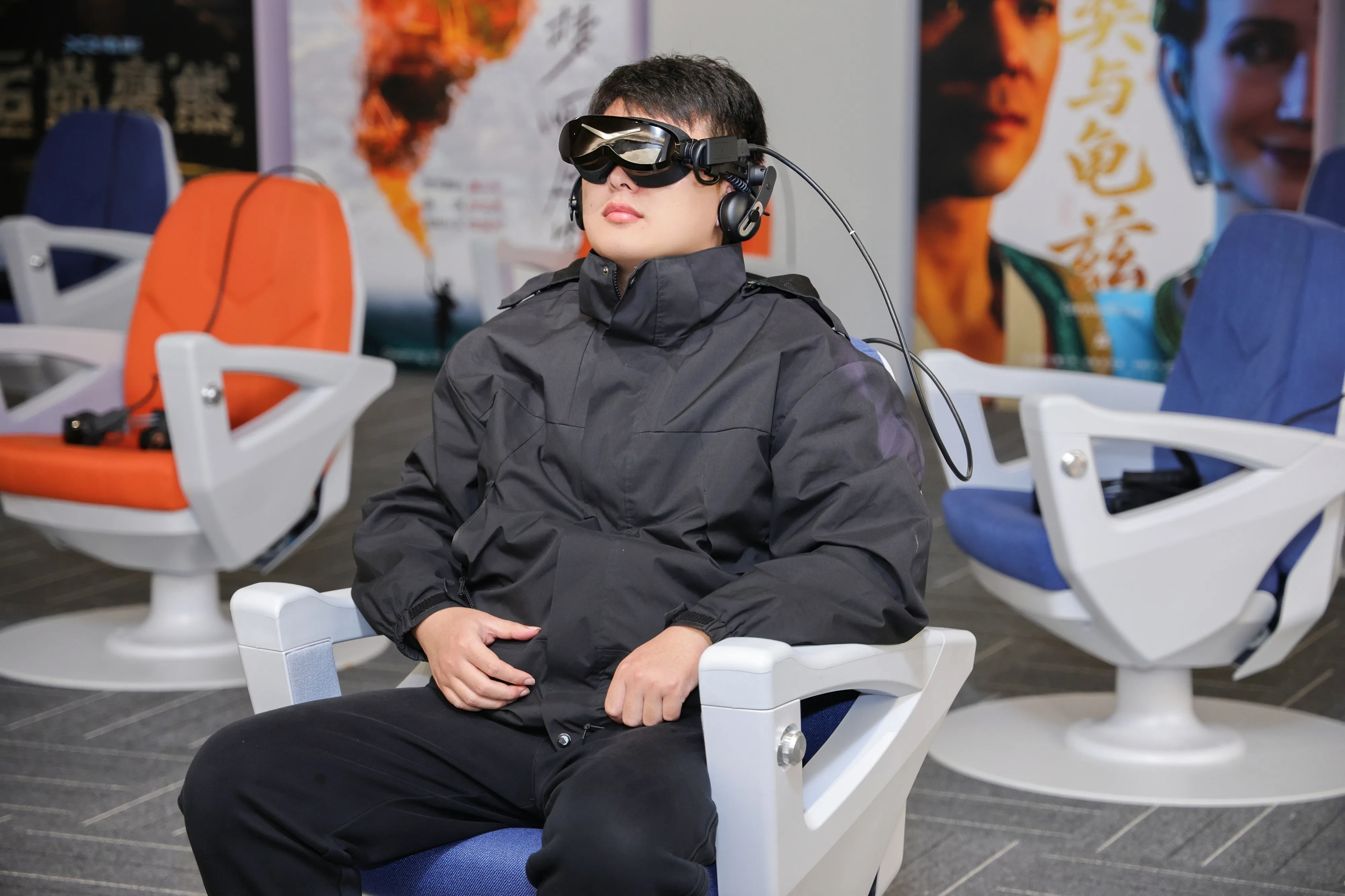
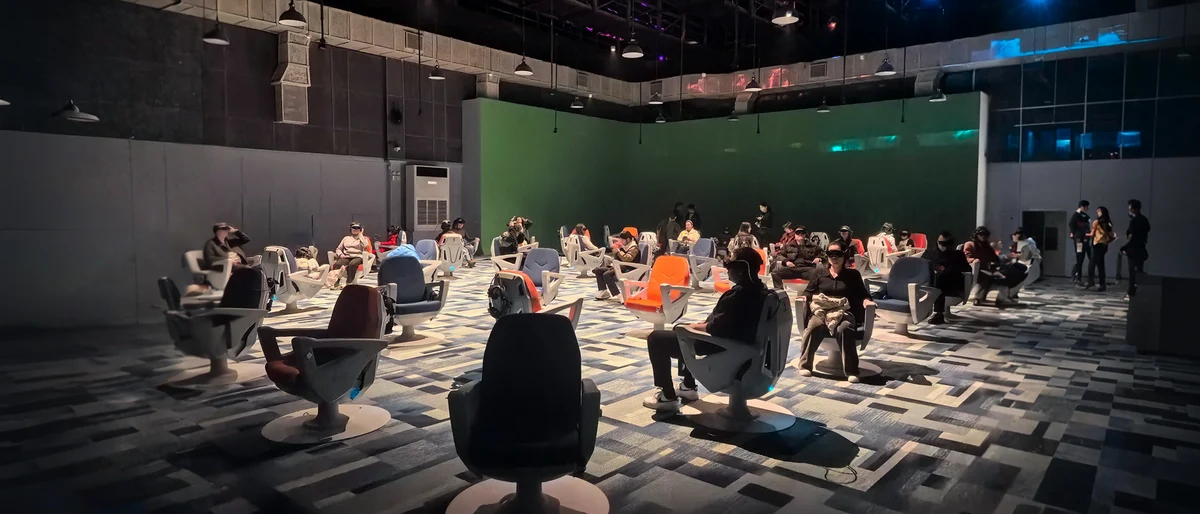
Xiying Group is exploring an answer to this question. By combining film culture with XR technology, Xiying created the XiYing Ultimate XR Cinema. Rather than simply adding VR headsets to a conventional theater, the project redesigned the viewing terminals, seating, computing equipment, and operational management around the requirements of immersive film. Pimax Business participated in the project by providing XR hardware and related solution support for the cinema environment. The seated XR Cinema solution combines high-resolution headsets, 360° rotating seats, computing units, and a multi-device management system.
Audiences remain seated while turning their bodies and heads to explore the surrounding virtual environment. This preserves the sense of spatial exploration while reducing the space requirements and collision risks associated with multiple viewers freely moving around a venue. The XiYing Ultimate XR Cinema has supported immersive films including Xuanzang and Kucha, The Eagles and Bears of Shimao, and Dream Back to Yan’an, allowing audiences to enter historical, cultural, and narrative environments through immersive viewing. This demonstrates that XR Cinema is not simply about the headset. It depends on the coordination of content, space, and the screening system.
It also highlights an important difference between XR Cinema and an ordinary VR experience: An XR theater is not simply about experiencing one device once. It is a screening system designed for ongoing operation.
What Does an XR Theater Really Need to Solve? Lessons from the Xiying Project
When the Headset Becomes the Screen, Visual Quality Shapes the Experience
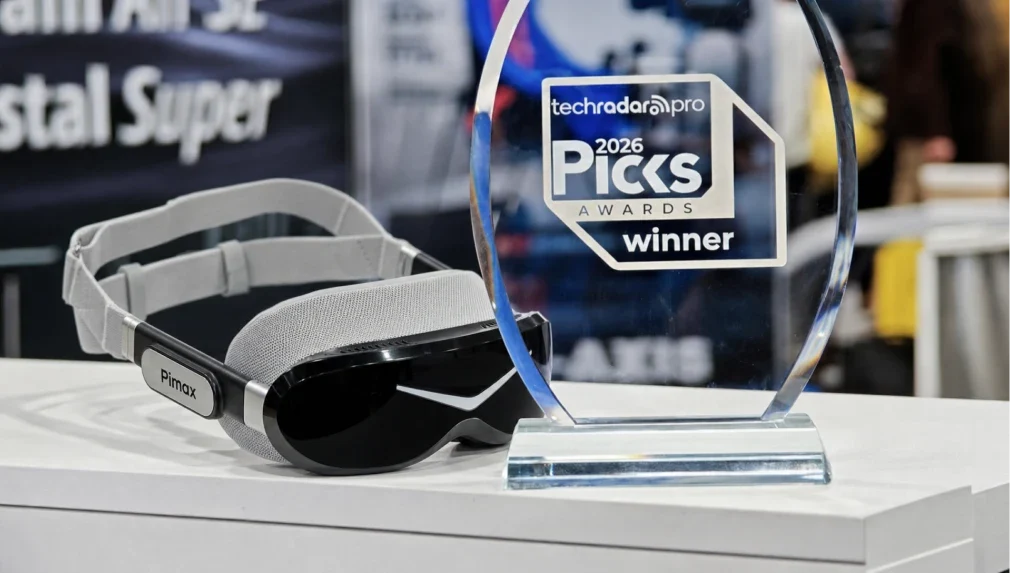
Traditional cinemas can improve visual quality by upgrading projectors, screens, and projection systems. In XR Cinema, however, the final image is displayed directly in front of each viewer’s eyes. This makes headset display quality particularly important. The Pimax Dream Air used in the Xiying project features Sony Micro-OLED panels with a resolution of 3840 × 3552 per eye, combined with ConcaveView Pancake optics.
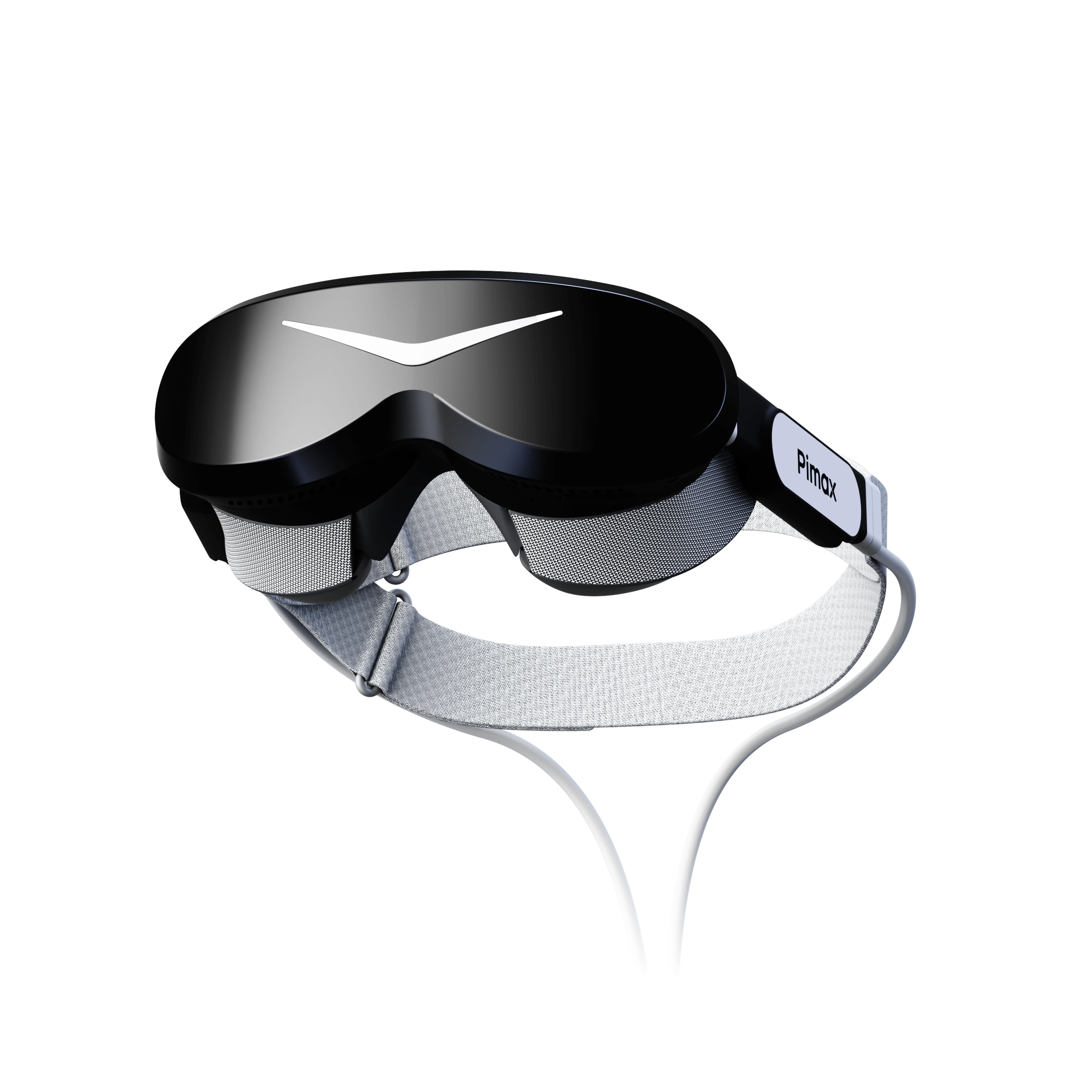
Pimax Dream Air
Lightweight immersive VR for enterprise collaboration, demonstrations and professional training.
Learn MoreFor immersive film, higher resolution is not simply about whether an image looks clear. It also affects the presentation of characters, architecture, textures, subtitles, and details in distant scenes. Film content is also highly sensitive to color, contrast, dark-scene performance, and visual atmosphere. When selecting headsets for XR Cinema, the display system therefore needs to be considered as part of the entire screening pipeline rather than as an isolated consumer electronics device.
A Wider Field of View Helps Film Move Beyond the Fixed Frame
One of the defining characteristics of XR film is that the story can extend beyond the traditional rectangular screen and into the space around the audience. Field of view therefore affects how much of the virtual environment a viewer can perceive.
In traditional cinema, the director uses the camera to determine where the audience looks. In immersive film, viewers can actively observe the space around them. A wider view can reduce the perception of visible boundaries and allow more of the surrounding environment to enter the viewer’s natural visual range. Wide-FOV immersion has long been one of Pimax’s core areas of focus. For XR Cinema, field of view is not simply a specification. It also affects the amount of surrounding space perceived by the audience and the overall presentation of immersive content.
A Film Is More Than a Short Demo, Making Wearing Comfort More Important
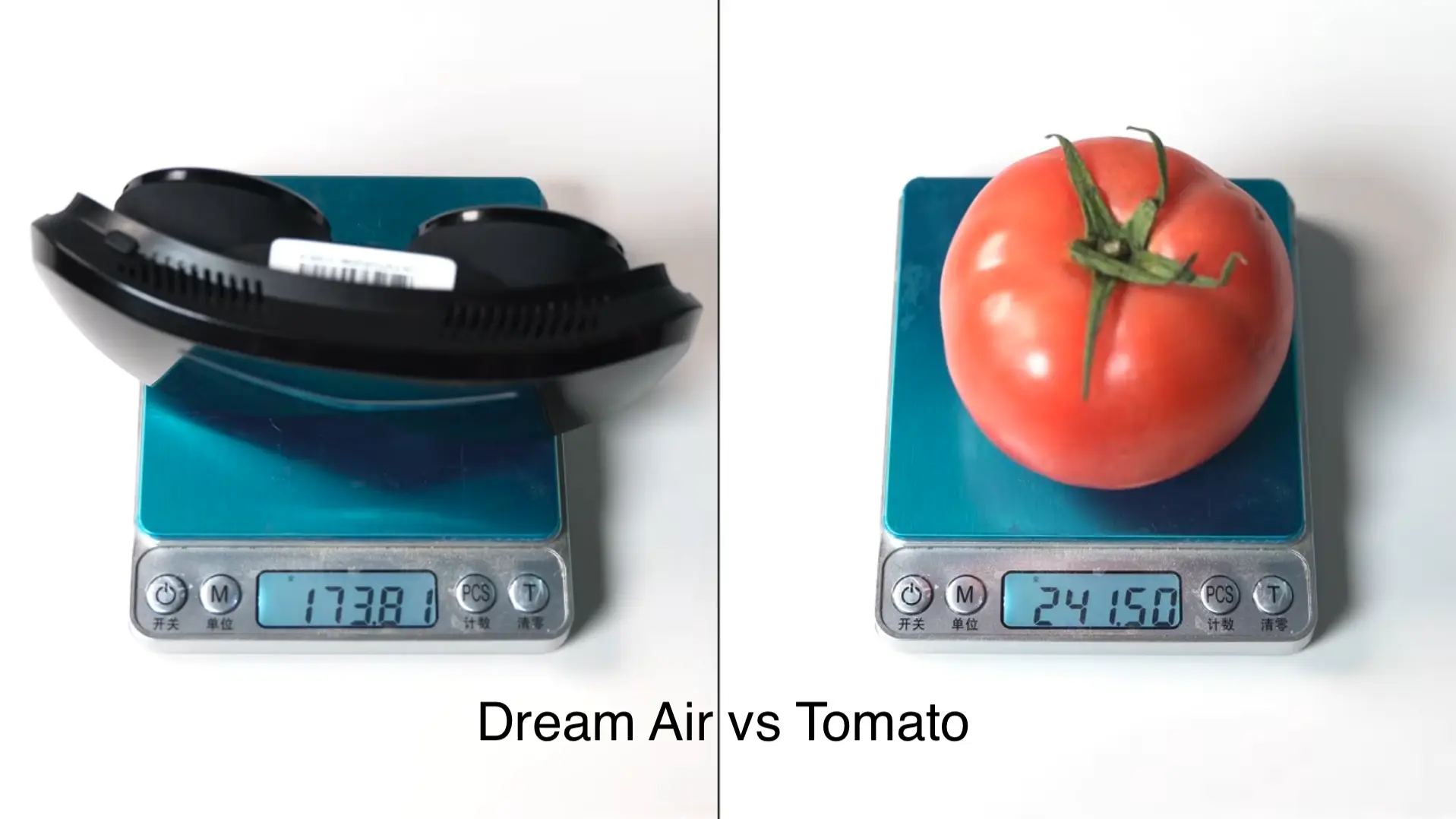
Many VR demonstrations last only a few minutes, while films require audiences to remain engaged for a complete narrative experience. As XR content moves from short-form demonstrations toward longer storytelling formats, headset weight, facial pressure, ease of head movement, and overall wearing comfort become increasingly important. The Dream Air used in the Xiying project adopts a lightweight design and weighs less than 170g, helping reduce the load on the viewer’s head while maintaining high-resolution visuals.
For a commercial XR theater, audiences can vary significantly in age, head shape, and previous VR experience. A lighter and easier-to-wear headset can lower the barrier for first-time users, reduce the amount of time staff spend repeatedly adjusting equipment, and make the system better suited to continuous public screenings.
Beyond Immersion, XR Cinema Must Work in Real Venues
XR Cinema ultimately has to operate in physical spaces. Movie theaters, museums, cultural venues, themed entertainment spaces, and temporary exhibitions all have different spatial requirements. If every seat requires complex PCs, cables, and external equipment, installation and maintenance requirements can increase rapidly as the project scales. The Xiying project uses PC-integrated 360° rotating seats that combine RTX 5070 computing units with the seating system. This reduces complex cabling while allowing seats to be arranged more flexibly according to the venue layout.
Fixed seating provides another practical advantage: audiences can rotate their seats to explore 360° content without freely walking around the venue. For commercial venues that continuously serve the public, this matters because immersion is only one consideration. Space utilization, audience safety, and on-site management are equally important.
How Can an XR Cinema Manage Multiple Headsets and Operate Reliably?
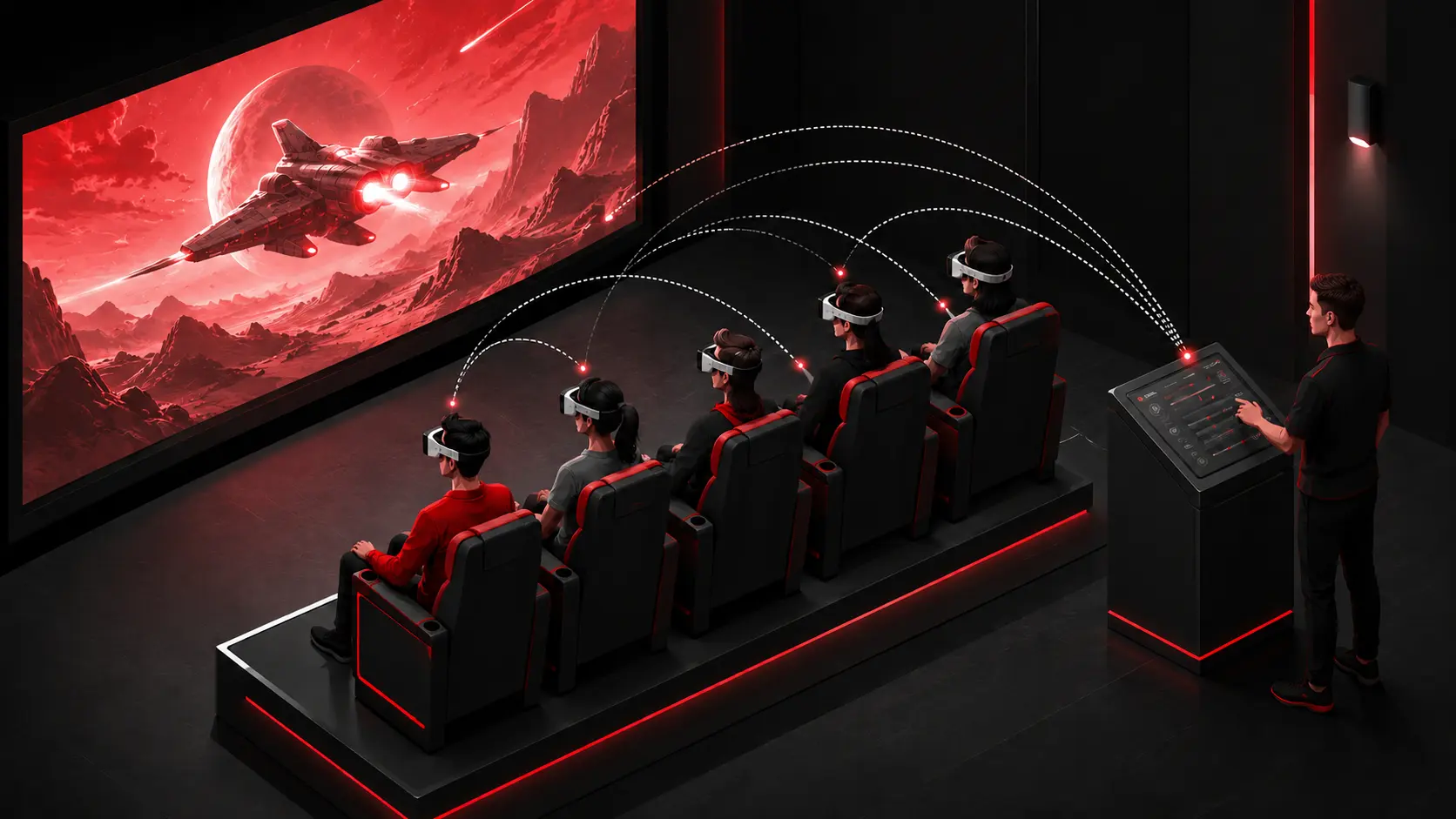
Playing content on a single VR device is relatively straightforward. Running multiple devices simultaneously across an entire theater is a different challenge. When should playback begin? Are all seats synchronized? Is every device running the same version of the film? What happens when one device encounters a problem? How quickly can the system prepare for the next screening? And if the project expands to multiple venues, how can content and devices be managed consistently? These questions determine whether XR Cinema can move from a one-time showcase to a repeatable commercial operating model.
In the XR Cinema solution, the multi-device management system supports content distribution, device monitoring, synchronized playback, session reset, and multi-venue management. For example, content can be distributed centrally over a local network to maintain consistent versions across seats. Device status can be checked before a screening, and once a session ends, the system can be reset and prepared for the next audience.
This is one of the biggest differences between enterprise XR deployment and personal VR use. For enterprises, the question is not simply whether a device can play the content. The question is whether the entire system can do so reliably, many times every day.
What Types of Venues and Immersive Entertainment Projects Can Use XR Cinema?
The XiYing Ultimate XR Cinema demonstrates a commercial model centered on cinematic content, but the same technical approach can extend into a broader range of immersive entertainment applications. Museums and cultural venues can use XR to reconstruct historical spaces and allow visitors to enter environments that are difficult to present through conventional exhibitions. Cultural tourism projects can transform local history, cultural heritage, historical figures, and city stories into immersive experiences.
Film festivals and art exhibitions can use XR to present VR180, 360° video, and other forms of immersive media. Brand experience centers and themed entertainment spaces can also use seated XR systems to create more complete digital content experiences. The content may differ across these applications, but the enterprise requirements are often similar: high-quality visuals must be balanced with public usability, space utilization, device management, rapid session reset, and long-term operations.
For more applications in this area, explore the Pimax Business Immersive Entertainment Solution .
For companies planning an XR Cinema or immersive experience project, headset selection should therefore go beyond comparing the specifications of an individual device. The more important question is whether content, hardware, computing equipment, physical space, and operational workflows can work together as a deployable system.
From a Single Experience to a Repeatable XR Cinema Model
For XR Cinema to become commercially viable, the ultimate test is not a single hardware specification. It is whether the entire experience can be deployed and operated consistently. The Xiying project uses a modular seated XR architecture that brings standardized headsets, PC-integrated 360° rotating seats, and multi-device management into a unified deployment model.
The value of this model becomes more apparent when an enterprise plans to expand from one experience area to more seats, additional content, or even multiple venues. A standardized architecture can reduce the need to redesign the entire technical system for every new deployment. For XR theaters, digital cultural tourism, and immersive entertainment venues, the ability to be deployed, managed, and replicated can be just as important as achieving the highest possible value for a single hardware specification.
The XiYing Ultimate XR Cinema demonstrates another important point: XR film is no longer simply about “watching video through a VR headset.” When cinematic content, professional XR hardware, spatial design, computing platforms, and operational systems work together, the theater itself can evolve from a screen into a digital space that audiences can enter and explore.
Frequently Asked Questions
What Is the Difference Between XR Cinema and a Regular VR Experience?
A regular VR experience often focuses on a single device or a short session. XR Cinema needs to support continuous commercial operation, including visual quality, wearing comfort, content distribution, synchronized playback, device management, session reset, and venue operations.
What Should an XR Theater Look for When Choosing a VR Headset?
Key considerations include resolution, field of view, color and contrast, wearing comfort, session duration, computing performance, deployment method, and multi-device management requirements.
For public-facing venues, headset weight, ease of adjustment, and operational efficiency should also be considered.
Is XR Cinema Only for Movie Theaters?
No. The same approach can also be applied to museums, cultural tourism venues, film festivals, art exhibitions, brand experience centers, and themed entertainment spaces.
The specific hardware and deployment model should be evaluated according to the content, venue conditions, audience size, and operational requirements.
Planning an XR Cinema or Immersive Film Project?
If your team is developing an XR Cinema, immersive film experience, digital cultural tourism project, museum experience, or location-based entertainment venue, Pimax Business can help evaluate suitable XR headsets, computing configurations, multi-device management, and deployment approaches based on your content format, venue conditions, device quantity, and operational requirements.
For enterprise projects, Pimax Business also supports volume purchasing and project customization services, with hardware configuration, feature adaptation, and system integration evaluated according to specific project requirements.
Contact Sales to discuss your XR Cinema or immersive entertainment project with a Pimax Business XR specialist.