State Grid Corporation of China
CASE STUDY
Power Grid VR Safety Training System
A benchmark digital VR safety training project for standardized electricalwork practice and long-term safety education.
Industrial Training
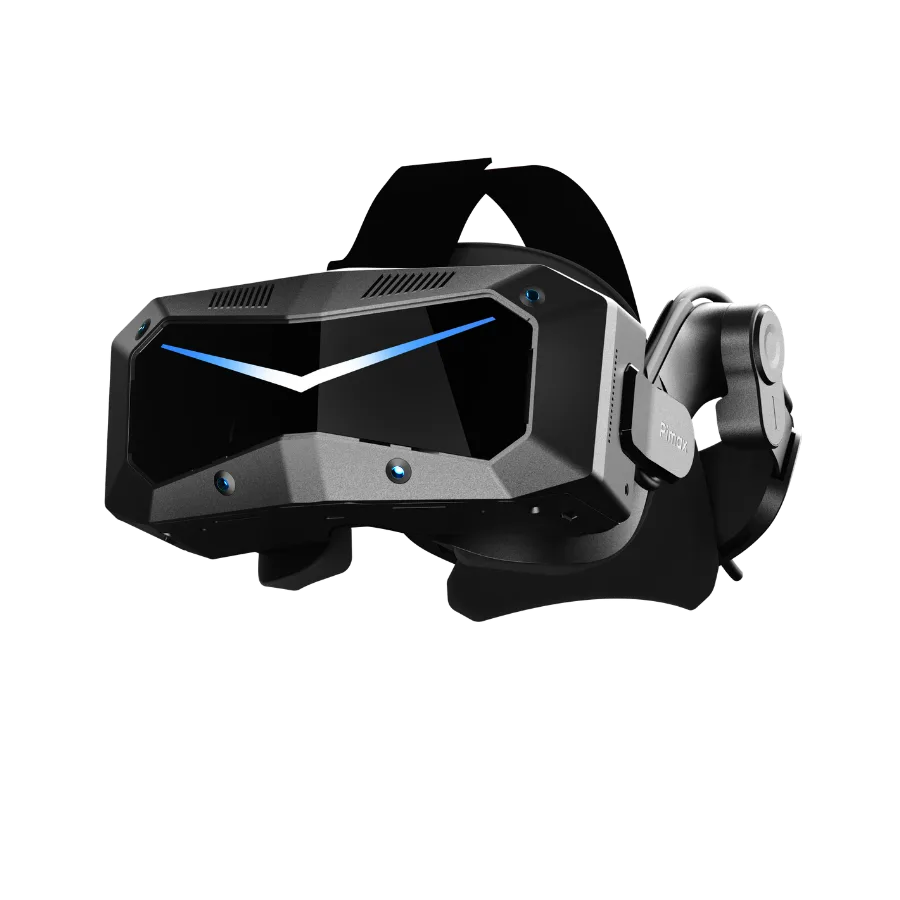 Pimax Crystal Super
VR Electrical Safety Training
Customer

Sichuan Power Grid has developed into one of China's largest and most complex ultra-large hub power grids, covering cities and prefectures across Sichuan Province. Its main grid forms multiple ring networks around key load centers and connects externally with East China, Central China, Northwest China, Chongqing, Tibet, and other regional grids through major AC and DC transmission channels.
Within the province, eight major 500kV power collection and transmission corridors have been built in areas including Ya'an, Maoxian, and Kangding. With outbound transmission capacity reaching 62.6 million kilowatts and cumulative outbound power transmission of approximately 2 trillion kWh, the grid has maintained 44 years of safe and stable operation.

State Grid Sichuan introduced a regularized digital VR safety education system to help electrical workers experience accident scenarios, strengthen safety awareness, and practice standardized procedures in a safer virtual environment.
Project Background
A regularized VR safety education benchmark project.
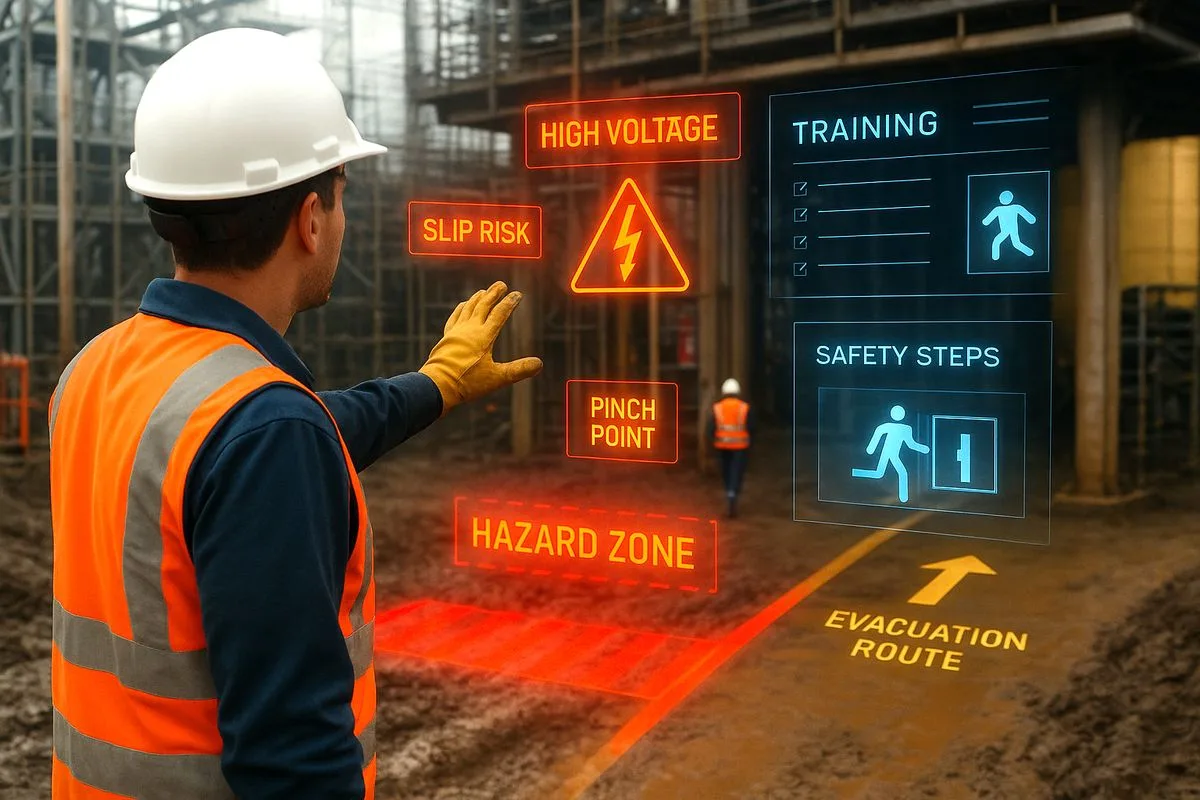
According to electrical safety incident analysis from a provincial State Grid unit, a high proportion of personal injury accidents were related to rule violations, while most of those incidents were further linked to carelessness and insufficient safety awareness among frontline workers. Strengthening safety awareness became one of the most urgent priorities for electrical operation safety.
Traditional training methods relied heavily on safety-day meetings, reading regulations, and watching photos or videos. Because the format was repetitive and the content changed little over time, it was difficult to create a deep, long-term safety warning effect for employees.
At the same time, energy regulators encouraged power enterprises to innovate safety training methods and promote experience-based safety education bases. The project therefore aimed to build a more immersive, repeatable, and scalable VR safety education system.
Key needs
- Stronger safety awareness for frontline workers
- More immersive accident warning education
- Repeatable training for high-risk scenarios
- Standardized safety education across multiple units
- A scalable system for long-term digital safety management
Solution
HIGH CLARITY VR HEADSET + MULTISENSORY SAFETY TRAINING PLATFORM + CLOUD-BASED SERVICE MANAGEMENT
To break through the limitations of traditional training, the project introduced a deeply integrated VR safety education system combining Pimax industry-grade PC VR headsets, multisensory VR motion platforms, realistic accident scenario content, and cloud-based service management. The solution was deployed across provincial, municipal, and county-level units to support regularized safety warning education.
HARDWARE
HIGH-CLARITY VR SAFETY TRAINING
- Industry-grade PC VR headset
- 8K-class visual clarity
- 140° ultra-wide field of view
- 90Hz refresh rate
- Designed to reduce visual blur and immersion breaks
- Paired with a multifunctional VR motion platform
- 3840 × 3840 / 3840 × 3552 per eye
- 50/53/57 PPD
- 106°–140° FOV
- 72 Hz / 90 Hz
TRAINING SYSTEM
MULTISENSORY ACCIDENT WARNING EXPERIENCE
- Real accident case reconstruction
- 1:1 virtual power operation scenarios
- PBR 3D development and motion capture
- 7 categories and 11 warning-level accident scenes
- Fall, electric shock, impact, hot air, and vibration feedback
- Restriction-level and warning-level safety education content
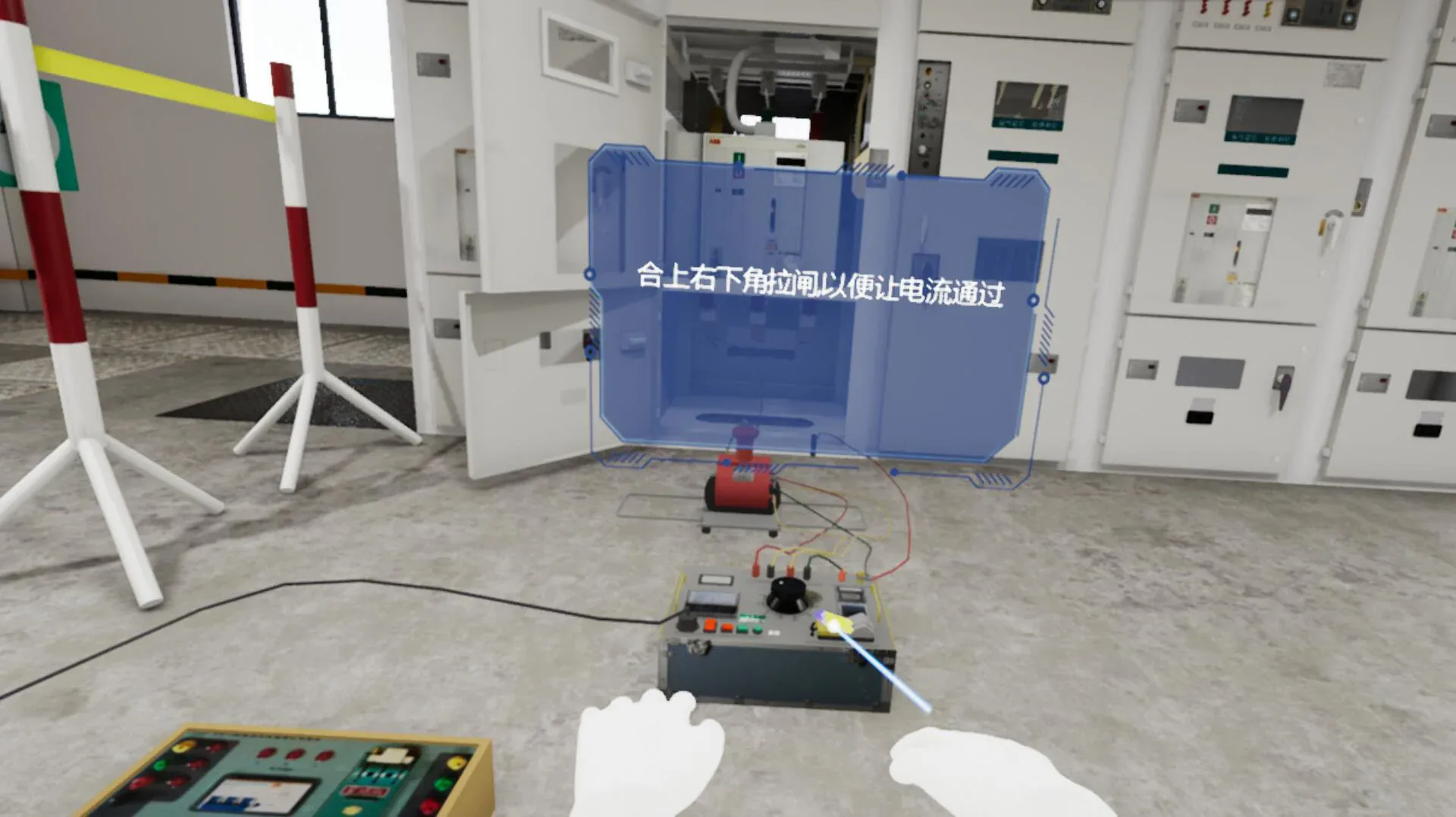
- Multisensory feedback
- 7 accident categories
- 11 warning scenarios
- Scenario-based safety awareness training
SERVICE SYSTEM
Cloud-based service package for regularized safety education.
The project adopted a service-package model instead of traditional one-time hardware purchase, enabling centralized content release, updates, and multi-terminal management across different service sites.
Content Service Package
- Annual service model
- Centralized content updates
- Repeatable safety education
Scenario Library
- Real accident case content
- 7 accident categories
- 11 warning scenarios
Multi-Level Deployment
- Provincial-level coordination
- Municipal and county coverage
- Service site expansion
Cloud Management
- Content release
- Multi-terminal management
- Remote update workflow
Long-Term Operation
- Regularized training
- Continuous content iteration
- Reduced experience fatigue
Regularized safety education deployment
Cloud-based service management, realistic scenario content, and multisensory training hardware help the system support long-term safety education rather than a one-time demonstration.
Project Value
A benchmark model for regularized digital VR safety education.
Wide multi-level coverage
The project expanded from 12 service sites in the first phase to 179 service sites in the second phase, enabling broader safety education coverage across provincial, municipal, and county-level units.
Lower content deployment cost
The service-package model helped reduce the cost and complexity of delivering VR safety content across multiple units, improving scalability and access.
Stronger safety awareness
By placing users in the perspective of accident participants, the VR experience creates a stronger psychological impact and supports the shift from passive compliance to active safety awareness.
Long-term digital management
With annual content updates and cloud-based management, the system supports sustainable, regularized safety education instead of one-time training experiences.
Industry demonstration value
The project was recognized in internal State Grid safety evaluation exchanges as an advanced practice, helping establish a technology benchmark for VR electrical safety education.
Build your own VR safety training system.
Talk to Pimax Business to explore headset selection, scenario design, multisensory training platforms, cloud management, and deployment support for safety education.